Armor Door
What is the standard thickness of a high-security steel door? The practical answer is usually around 44 to 50 millimeters, or approximately 1¾ to 2 inches. However, thickness alone does not define security. A reinforced 45-millimeter door may outperform a thicker door with weak hinges, a flexible frame, or poorly fitted locks.
High-security doors are often specified for data centers, laboratories, warehouses, apartment entrances, and protected service areas. Their construction may include steel skins, internal stiffeners, mineral cores, welded edges, and heavy-duty hinges. In some demanding projects, door thickness can exceed 60 millimeters. The correct choice depends on forced-entry resistance, fire performance, acoustic needs, traffic frequency, and local building requirements.
Door hardware consultant Lori Greene has emphasized, “The door is only as strong as the frame.” That point deserves attention. A thick leaf cannot compensate for a frame that twists under load. Nor can an expensive lock repair careless installation. This guide examines seven practical tips for selecting standard high-security steel door thickness, checking the frame, and matching the assembly to real site conditions.
A neat number can be comforting.
It can also mislead.
Product labels sometimes use “heavy duty” without showing tested performance. Therefore, buyers should request verified specifications, test reports, and installation details from reputable manufacturers. Measure the existing opening carefully. Check clearances, hinge reinforcement, threshold conditions, and daily usage before choosing a thicker model.
The best decision is rarely the thickest door available. It is the complete, tested assembly that fits the building, protects the occupants, and performs reliably over time.
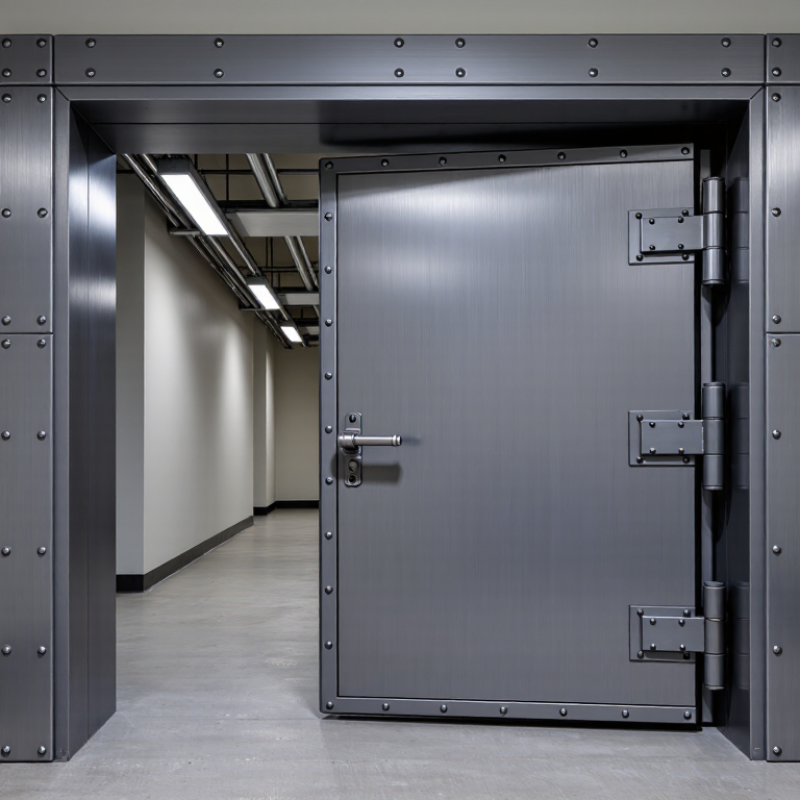
A standard high-security steel door is defined by its complete performance, not by thickness alone. The door leaf, frame, hinges, locks, core, and anchors must work as one tested system. A thick panel can still fail when the frame twists or the hinges loosen.
Many commercial security doors use steel skins around 1.5 to 3 millimeters thick. The total door thickness often ranges from 45 to 100 millimeters, depending on the core and required protection. Thicker steel may resist dents and forced impact better. However, extra weight can increase hinge wear and make daily operation difficult. More metal is not always better.
Testing provides stronger evidence than sales language. Check resistance ratings, fire performance, smoke control, acoustic results, and cycle testing where relevant. Confirm that the tested design matches the installed size and hardware. A reliable specification should identify steel grade, skin thickness, core material, frame depth, anchor spacing, and lock protection.
Installation matters greatly. Small gaps, weak fasteners, or an unlevel frame can reduce security. I have seen carefully fabricated doors perform poorly because the surrounding wall was overlooked. That detail is easy to miss. Local building codes and project requirements may also change the acceptable design. A qualified inspector should verify the door after installation, not only during factory production.
Door thickness directly affects security, weight, insulation, and service life. A thicker steel leaf usually resists bending and forced impact better. However, thickness alone does not create a high-security door.
Seven practical checks matter during selection. Measure the steel gauge, not only the overall leaf depth. Check the core, because weak filler can reduce performance. Inspect hinges, frame connections, and the locking area. These parts transfer impact into the wall. Confirm that the frame matches the door’s weight. Poor alignment can cause rubbing, noise, and early failure. Review tested performance data when available. Finally, consider the opening’s daily traffic and exposure to moisture.
In field inspections, I have seen thick doors fail because their frames were poorly anchored. That detail is easy to miss. A heavy leaf also needs correctly rated hinges and accurate installation. Otherwise, the door may sag within months. Thicker steel can improve durability, but it may increase operating force and installation demands. Accessibility and emergency operation should remain practical. I would not choose thickness from a brochure alone. Site conditions, maintenance habits, and test evidence deserve equal attention. Even experienced teams sometimes overestimate thickness and underestimate workmanship. That mistake is worth revisiting.
| Tip | Recommended Door Thickness | Typical Steel Face Thickness | Security and Durability Effect | Suitable Applications | Important Selection Notes |
|---|---|---|---|---|---|
| 1 | 1-3/4 in (44.5 mm) | Common commercial hollow-metal door construction uses approximately 18- to 16-gauge steel faces, depending on the assembly. | Provides a practical balance of stiffness, impact resistance, weight, cost, and hardware compatibility. It is a common baseline for commercial security doors. | Office buildings, schools, apartments, retail areas, utility rooms, and general commercial entrances. | Door thickness alone does not establish a security rating. The frame, hinges, lockset, closer, glazing, anchors, and installation must be considered as one assembly. |
| 2 | 2 in (50.8 mm) | Often paired with heavier-gauge faces or reinforced cores in higher-demand assemblies. | Allows additional space for reinforcement, insulation, acoustic materials, or specialty hardware. It can improve rigidity when the complete assembly is engineered for this thickness. | High-traffic corridors, institutional buildings, industrial interiors, and locations requiring enhanced impact or abuse resistance. | Confirm that the frame, hinges, strike, panic hardware, and door closer are designed for a 2-inch door; standard hardware may not fit correctly. |
| 3 | 14-gauge steel face (approximately 0.0747 in / 1.90 mm) |
Thicker than 16- or 18-gauge sheet steel; commonly selected for heavy-duty doors and frames. | Offers greater resistance to denting, deformation, and repeated impact than lighter sheet gauges. It also adds weight to the door leaf. | Warehouses, loading areas, mechanical rooms, public facilities, and high-abuse locations. | Gauge values describe the steel face, not the total door thickness. A thicker face does not automatically provide forced-entry protection without a suitable lock and frame. |
| 4 | 12-gauge steel face (approximately 0.1046 in / 2.66 mm) |
Substantially heavier steel face construction, typically used where high impact resistance is a priority. | Improves resistance to bending and severe abuse, but increases door weight, hinge loading, installation requirements, and operating force. | Industrial plants, secure service areas, infrastructure rooms, correctional or high-abuse environments when specified by the project. | Use heavy-duty hinges, reinforced frames, compatible closers, and properly anchored hardware. Accessibility and egress requirements must still be met. |
| 5 | 1-3/4 in with a reinforced core | Steel face thickness may range from 18 gauge to heavier gauges, while internal reinforcement varies by design. | A reinforced core can improve lock-area strength, hinge attachment, resistance to twisting, and long-term dimensional stability more effectively than increasing face thickness alone. | Security offices, electrical rooms, data areas, back-of-house facilities, and doors with heavy-duty locks or closers. | Ask for details about lock reinforcement, hinge reinforcement, core material, and the tested performance of the complete door-and-frame assembly. |
| 6 | 1-3/4 to 2-1/4 in fire-rated assembly | Steel thickness and core construction depend on the tested and labeled door assembly. | Fire performance is determined by the complete tested assembly, including the door, frame, hardware, glazing, and installation—not by thickness alone. | Exit stairways, corridors, plant rooms, service shafts, and openings required to separate fire or smoke compartments. | Select a listed and labeled assembly with the required fire rating. Do not modify the door, frame, or hardware in a way that could invalidate the listing. |
| 7 | Project-specific high-security construction | May use heavier-gauge faces, internal steel reinforcement, ballistic materials, or specialty cores as required by testing. | Can provide enhanced resistance to forced entry, ballistic threats, blast effects, or severe impact when designed and tested for the specific threat. | Critical infrastructure, secure storage, controlled-access facilities, and specialized government or industrial applications. | Specify the required test standard and performance level first. A thicker or heavier door is not a substitute for certified forced-entry, ballistic, blast, or acoustic performance. |
Choosing the right high-security steel door thickness requires more than selecting the heaviest leaf. Seven factors deserve attention: threat level, tested resistance, steel gauge, frame strength, hardware load, fire performance, and installation quality.
SDI-100 guidance commonly identifies 18-gauge steel faces, about 1.2 mm thick, for standard commercial doors. Heavier 16-gauge steel, about 1.5 mm, can improve impact resistance, but thickness alone proves little. EN 1627:2021 defines six resistance classes, from RC1 to RC6. The selected door should match a documented test class, not just a sales description.
A practical assessment should examine the entire assembly. A thick leaf with a weak frame can still fail. Hinges, locks, anchors, and wall connections must carry the added weight. Check them together.
ASTM fire-door testing also shows why security and fire ratings should remain separate performance questions.
Site conditions matter. A humid loading area may require corrosion protection, while a secure archive may value acoustic control and stable temperature. Door clearance, daily cycle frequency, and emergency exit requirements also affect the correct specification.
Experienced installers often find that poor anchoring causes more trouble than a slightly thinner steel skin. That point is easy to overlook. I would also avoid choosing 14-gauge steel automatically; excessive weight can accelerate hinge wear and complicate maintenance. Review the test evidence, measured opening, hardware schedule, and lifecycle demands before approving the final thickness.
7 Tips on Standard High Security Steel Door Thickness?
Security performance depends on more than steel thickness. A 1.5 mm skin may suit a controlled interior opening, while exposed high-risk entrances often require thicker steel, reinforced cores, and stronger frames. Tip one: define the threat before selecting a thickness. Tip two: check the complete door assembly, not the leaf alone. Attackers target hinges, locks, glazing, and frame connections.
Tip three: request a recognized forced-entry rating. EN 1627 classes, for example, assess resistance against specified tools and attack time. Other regions may use different test systems. Tip four: verify fire performance under standards such as UL 10C, NFPA 252, or EN 1634-1. Fire ratings cover the tested assembly, including seals and hardware. They do not automatically prove forced-entry resistance. Test labels matter.
Tip five: examine how the test was performed. A credible report identifies the specimen, tools, duration, installation method, and failure point. Tip six: match hardware to the rating. A thick leaf with weak hinges is a false confidence. Tip seven: confirm site conditions, especially wall strength, corrosion exposure, and daily traffic. Real inspections often reveal gaps around frames or poorly adjusted closers. That is where performance slips. I have seen specifications focus heavily on millimeters while ignoring installation quality. Thickness still matters, but it should support a verified rating, not replace one.
A high-security steel door is only as dependable as its installation. Thickness matters, but a heavy leaf cannot compensate for a weak frame or poor anchoring. Confirm the door thickness, frame gauge, hinge capacity, and wall construction before delivery. On site, measure the opening at several points. Walls are rarely perfectly square.
Set the frame plumb, level, and tightly aligned. Use approved anchors suited to concrete, masonry, or steel stud walls. Do not fill gaps with random materials; movement can distort the frame. Check the threshold for a smooth seal, especially where water or dust may enter. Adjust hinges before testing the lock. The door should close without dragging, scraping, or excessive force.
Maintenance should be scheduled, not improvised. Inspect hinges, fasteners, seals, closers, and locking points every few months. Remove dust from the threshold and lubricate moving parts only with compatible products. Harsh cleaners can damage protective coatings. A simple flashlight can reveal gaps around the seal.
One common mistake is checking the lock but ignoring the frame. That approach is incomplete. From field experience, small alignment issues become expensive after repeated use. Record inspection dates and unusual sounds. If the door begins to sag, do not force it shut. Recheck the hinges, anchors, and surrounding wall before making adjustments.
Nominal steel sheet thickness commonly used in commercial and high-security door construction. Lower gauge numbers indicate thicker steel.
Approximate nominal values: 18 gauge is about 1.2 mm, 16 gauge about 1.5 mm, 14 gauge about 1.9 mm, and 12 gauge about 2.7 mm. Final door performance depends on the complete tested assembly, including the frame, hinges, locks, anchors, and installation method. During maintenance, inspect alignment, fasteners, seals, hinges, and locking hardware regularly, and repair corrosion or damage promptly.
No. Thickness alone proves little. A heavy door can still fail with a weak frame or poor anchors.
Around 1.2 millimeters is commonly used for standard commercial doors. Thicker steel may improve impact resistance.
Request documented resistance testing for the complete door assembly. Do not rely only on sales descriptions.
Hinges, locks, anchors, frames, and wall connections must carry the added weight. Check them together.
No. Fire and security ratings answer different questions. Review both separately before approving the specification.
Humid loading areas may need corrosion protection. Archives may need acoustic control and stable temperatures.
Measure the opening at several points. Set the frame plumb, level, and tightly aligned.
Inspect hinges, fasteners, seals, closers, and locking points every few months. Remove threshold dust regularly.
Scraping, dragging, sagging, or unusual sounds may indicate misalignment. Do not force the door shut.
Not always. Excessive weight can wear hinges faster and complicate maintenance. I would review lifecycle needs first.
Choosing a high-security steel door requires more than simply selecting the thickest option. What is the standard thickness of a high-security steel door depends on its intended application, security level, structural design, core materials, fire-resistance needs, and local building requirements. Door thickness affects resistance to forced entry, impact, warping, and long-term wear, but the frame, hinges, locks, seals, and hardware must also be properly matched to achieve reliable performance.
When selecting the right thickness, consider the building’s risk level, traffic frequency, environmental conditions, fire and acoustic requirements, installation space, and maintenance expectations. Security ratings and performance tests can help confirm whether a door meets the required resistance standards rather than relying on thickness alone. Correct installation is equally important: the frame must be securely anchored, clearances must be accurate, and hardware should be inspected regularly. With suitable thickness, certified performance, professional installation, and routine maintenance, a steel security door can provide durable protection and dependable daily operation.
