Armor Door
Choosing a front door is not just a style decision. It affects upkeep, comfort, and how well the entry stands up to rain, sun, and daily use. So, what is the best material for a low-maintenance front door? For many homes, fiberglass and steel are the strongest contenders. The U.S. Department of Energy notes that both can offer good insulation and require less maintenance than wood. Still, performance depends on the door’s construction, finish, hardware, and installation. A poorly sealed door can invite drafts or moisture, whatever its material.
The 2024 Cost vs. Value report puts the average U.S. steel entry-door replacement at $2,355, with an estimated $4,430 in resale value. That is a projected 188.1% cost recouped—not a maintenance score, and not a promise for every home. Building-science engineer Joseph Lstiburek’s often-cited reminder is simple: “Water is the enemy of buildings.” It applies here. A sheltered entry and intact weatherstripping can matter as much as the door slab.
Fiberglass resists rust and won’t rot, but cheaper models can look less convincing up close. Steel is tough and often costs less, yet scratches may expose metal to corrosion. Wood has warmth and repairability, but usually asks for more frequent finish care. There is no perfect answer. This guide compares real upkeep, durability, and cost so you can choose a door that suits your climate and tolerance for maintenance.
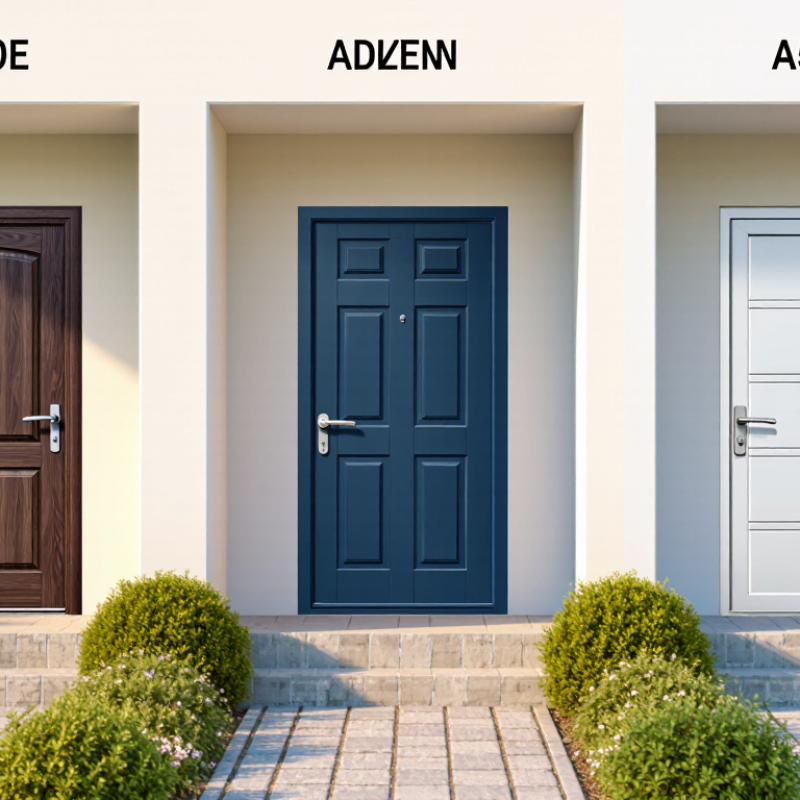
What Is the Best Material for a Low Maintenance Front Door?
A low maintenance front door is judged by more than its material. Cleaning, refinishing, and repair needs matter just as much. Fiberglass usually performs well because it resists moisture, dents, and seasonal movement. A soft cloth and mild soap often remove dust and fingerprints. It may still need repainting when the finish fades or peels.
Steel doors offer strong security and a smooth, durable surface. However, a deep scratch can expose bare metal. Moisture may then create rust around the damaged area. Touch-up paint should be applied promptly. Steel can also show dents clearly, and repairs may require professional filling and repainting. Low maintenance does not mean damage-proof.
Wood provides natural texture and warmth, but it demands closer attention. Direct sunlight, rain, and humidity can crack or fade its finish. Refinishing may be needed every few years, especially on an exposed entrance. A wide roof overhang helps. So does wiping water from the lower edge after heavy rain. In practical inspections, neglected wood doors often reveal swelling near the threshold first. That detail is easy to miss. Fiberglass may be the most balanced choice for many homes, but installation quality remains critical. An uneven frame can cause rubbing, air leaks, and repeated repairs, whatever material surrounds it.
What Is the Best Material for a Low Maintenance Front Door?
Compare Fiberglass, Steel, and Wood for Moisture and Impact Resistance
A low-maintenance door must handle rain, humidity, sunlight, and daily knocks. Fiberglass usually performs best against moisture because it does not rust, rot, or swell like unsealed wood. The U.S. Department of Energy reports that insulated steel and fiberglass doors commonly achieve R-5 to R-6.5. That insulation can reduce heat transfer around the entryway. Fiberglass can still crack after a severe impact. This detail is easy to overlook.
Steel offers the strongest practical resistance to dents and forced impacts. However, a deep scratch can expose the metal and encourage corrosion, especially near coastal air. The USDA Forest Products Laboratory’s Wood Handbook explains that wood repeatedly gains and loses moisture, causing swelling, shrinking, and joint movement. Proper paint, edge sealing, and a protective overhang reduce those problems, but they do not remove them. Wood remains repairable and visually warm, although it demands more attention.
For impact performance, material alone is not enough. ASTM E1996 includes large-missile testing with a 9-pound 2-by-4 traveling at about 34 feet per second. The complete door assembly must pass, including glass, frame, and hardware. In real homes, I would choose fiberglass for wet climates, steel for heavy abuse, and wood only with disciplined maintenance. No door is maintenance-free. My judgment could change after inspecting drainage, shade, and the threshold.
Comparative ratings for moisture resistance, impact resistance, and maintenance interval
Ratings use a 1–5 comparative scale based on typical residential door construction and routine maintenance requirements. Actual performance depends on finish quality, installation, climate, and exposure.
What Is the Best Material for a Low Maintenance Front Door?
A low-maintenance front door should resist moisture, sunlight, dents, and seasonal movement. Fiberglass and composite doors often meet these demands with limited repainting. Steel can be durable, but exposed scratches may allow rust to develop. Material alone does not determine comfort. The NFRC label provides standardized performance information for the complete door assembly. It typically lists U-factor and air-leakage ratings. A lower U-factor indicates better resistance to heat transfer. Lower air leakage means fewer drafts around the closed door.
Read the label carefully before comparing prices or finishes. Compare doors with similar sizes, glass areas, and panel designs. A small glass insert can change the overall U-factor. Poorly sealed edges can also affect air leakage. NFRC ratings offer a reliable comparison, but they do not replace a careful installation review. Look closely. The frame, threshold, and weatherstripping must fit tightly. In a cold climate, a modest U-factor improvement may noticeably reduce the chilly feeling near the entry.
A durable finish reduces routine maintenance, yet installation remains easy to underestimate. Continuous weatherstripping should compress evenly without leaving visible gaps. The sill should drain water away from the interior floor. I have learned not to judge a door by its surface alone. A beautiful finish may hide weak sealing or a poorly adjusted frame. Perfect numbers are not enough. Check the label, inspect the edges, and ask how the assembly was tested.
A low-maintenance front door should resist weather before it demands attention. Coated aluminum is a practical option because it does not rot, swell, or attract termites. However, the coating matters as much as the metal beneath it. A poorly selected finish can fade, chalk, or lose gloss near a sunny entryway.
AAMA 2604’s five-year Florida test offers a useful benchmark for coated-aluminum finishes. The test exposes samples to intense sunlight, heat, humidity, and rain. Evaluators check color change, gloss retention, chalking, adhesion, and film performance. These details matter when a door faces west and receives afternoon sun. They also matter near coastal air, where salt can settle around hinges and frame joints.
The test is not a promise of identical performance at every home. Orientation, cleaning habits, shade, and local weather change the result. I once assumed that a high test rating meant zero maintenance. That was too simple. A durable finish still benefits from occasional washing with mild soap and fresh water. Avoid abrasive pads. Inspect the lower corners after wet seasons. Small scratches can expose vulnerable areas, although repair methods vary by finish and should follow the coating manufacturer’s guidance. Look for documented AAMA 2604 compliance, test conditions, and warranty terms before choosing a front door. Those records reveal more than a smooth showroom sample.
| Material / Finish | Typical Maintenance Profile | Moisture and Corrosion Considerations | Dimensional Stability | How AAMA 2604 Applies | Overall Low-Maintenance Potential |
|---|---|---|---|---|---|
| Coated aluminum Organic architectural coating |
Routine washing with mild soap and clean water is generally sufficient. Inspect seals, hardware, and drainage paths periodically. | Aluminum does not rust like carbon steel, but exposed or damaged areas can experience oxidation or galvanic corrosion, especially in coastal environments. | Good resistance to swelling and shrinking when properly designed and installed; thermal expansion should be accommodated in the assembly. | Directly relevant. AAMA 2604 is a high-performance specification for organic coatings on aluminum and other architectural substrates. A five-year South Florida exposure evaluates properties such as color retention, chalking, gloss, film adhesion, and resistance to weathering. | High when the complete finish system is tested and the substrate, pretreatment, coating, and application process are controlled. |
| Fiberglass-reinforced composite Factory-applied painted or molded finish |
Usually requires periodic cleaning and inspection of the painted surface, weatherstripping, threshold, and hardware. Recoating may eventually be required for painted finishes. | Generally resistant to rot and moisture absorption, although joints, edges, hardware penetrations, and damaged coatings still require protection. | Typically stable across normal seasonal humidity changes; installation quality and door-core construction remain important. | AAMA 2604 may be relevant to an aluminum component or an approved organic coating system, but it does not by itself certify the entire fiberglass door assembly. | High for moisture resistance, with finish performance dependent on the specific coating and manufacturing process. |
| Steel Painted or coated steel |
Clean periodically and repair chips, scratches, and exposed edges promptly. Damaged coating can require sanding, priming, and repainting. | Strong and durable, but exposed carbon steel can corrode. Edge protection, pretreatment, drainage, and coating continuity are critical. | Generally stable, although thermal movement and condensation can affect the door system and surrounding components. | The coating may be evaluated under an applicable architectural-finish specification, but AAMA 2604 performance does not eliminate the need for corrosion protection of the steel substrate. | Medium to high when coating damage is prevented and promptly repaired. |
| Wood Painted or stained solid wood / engineered wood |
Requires regular cleaning and inspection. Painted or stained surfaces commonly need periodic touch-up and refinishing, especially on exposed edges and horizontal surfaces. | Sensitive to moisture cycling. Unsealed end grain, joints, and coating failures can contribute to swelling, sticking, cracking, or decay. | More affected by changes in humidity than metal or composite materials; correct sealing and clearance are essential. | AAMA 2604 is not a general performance standard for wood doors. The relevant evidence is the coating manufacturer’s exterior durability data and the door’s construction details. | Low to medium, depending heavily on exposure, overhang, sealing, and maintenance discipline. |
| uPVC / vinyl Integral color or laminated surface |
Usually cleaned with mild soap and water. Avoid abrasive cleaners and solvents that can damage the surface. | Does not rust or rot, but seals, reinforcing components, hardware, and drainage systems still require inspection. | Can expand and contract more noticeably with temperature changes than many metal systems; reinforced profiles and correct clearances help control movement. | AAMA 2604 is not normally the primary standard for the complete uPVC door. Evaluate the specific surface finish using its applicable weathering and color-retention documentation. | High for routine cleaning, provided the profile, finish, and hardware are suitable for the exposure. |
Climate should guide the material more than appearance. Fiberglass suits humid or coastal areas because it resists moisture, swelling, and everyday dents. Steel offers strong security and stable insulation, but damaged coatings can expose it to rust. Wood feels warm and authentic, yet repeated rain and sunlight demand regular sealing. No door is maintenance-free. I once assumed a sheltered porch solved everything. It did not.
Weather exposure changes the answer. A south-facing door may face intense ultraviolet light, while wind-driven rain attacks edges and thresholds. The U.S. Department of Energy reports that windows account for roughly 25–30% of residential heating and cooling energy loss; doors with large glass panels can add similar comfort concerns. Choose insulated glazing and check the National Fenestration Rating Council label. The 2021 International Energy Conservation Code lists a 0.50 maximum U-factor for many opaque residential doors, although local requirements vary.
Tips: Inspect the bottom edge every season. Replace cracked weatherstripping quickly. In wet climates, prioritize fiberglass or well-protected steel. In dry, sunny regions, use finishes rated for ultraviolet exposure. For wood, plan on periodic refinishing, not occasional hope. A low-maintenance door still needs a clean threshold, tight seals, and careful installation. Data helps, but the porch microclimate often decides the result.
Fiberglass and composite doors resist moisture, dents, and seasonal movement. They often need less repainting, though they are not maintenance-free.
The label reports U-factor and air-leakage performance for the complete door assembly. Lower numbers indicate less heat transfer and fewer drafts.
No. Compare similar sizes, glass areas, and panel designs. A small glass insert can change the U-factor.
Check the frame, threshold, and weatherstripping. Seals should compress evenly, with no visible gaps.
Fiberglass resists moisture in humid areas. Steel offers strength, but scratches can rust. Wood needs regular sealing in rainy or sunny places.
It checks coated-aluminum samples for color change, gloss retention, chalking, adhesion, and film performance after harsh exposure.
No. Weather, shade, and cleaning habits still matter. Wash the surface with mild soap and water, and inspect lower corners after wet seasons.
Look at the bottom edge each season. Replace cracked weatherstripping, and make sure the sill drains water away from the interior floor.
Choosing the right entry door begins with understanding what “low maintenance” means for your home. The best option should require minimal cleaning, refinishing, and repairs while continuing to resist moisture, impacts, and daily wear. Fiberglass generally offers strong moisture resistance and limited upkeep, while steel provides excellent durability but may need attention if its protective coating is damaged. Wood can deliver natural beauty, but it typically requires more frequent sealing and protection, especially in wet or highly exposed climates. So, what is the best material for a low-maintenance front door? In many cases, fiberglass is the most balanced choice, although climate and installation conditions matter.
Performance ratings can also guide your decision. NFRC labels help compare U-factor and air-leakage ratings, which indicate insulation and sealing performance. For coated aluminum finishes, AAMA 2604’s five-year Florida exposure test provides useful information about color retention and weathering resistance. Select a material based on local moisture, sunlight, temperature changes, storm exposure, and your willingness to perform routine upkeep.
