China Top Fire Door Requirements for Commercial Buildings?

Time:2026-11-03 Author:Sienna
0%

Fire doors are not just heavy panels set into a corridor wall. In a commercial building, the right door can help contain smoke and flames, protect escape routes, and support safer evacuation. In China, requirements depend on the building’s use, layout, height, and the door’s location. A door beside a stairwell may need different fire-resistance performance from one serving a storage room. Details matter.

What are the legal requirements for fire doors in commercial buildings? The answer is not a single rating that fits every project. China’s building fire-safety rules and applicable technical standards guide choices such as fire-resistance class, door location, closer and latch hardware, installation, and maintenance. Project teams should check the current requirements with the design professional and relevant local authorities. Product documentation matters, too: labels and test records should match the specified door, not merely look convincing in a photograph.

On site, small defects can have real consequences. A door that cannot close fully, a missing seal, or a wedged-open leaf may undermine the intended fire separation. Inspect the frame, hinges, closer, seals, and surrounding wall as one assembly. Keep records of installation and routine checks. No checklist replaces a qualified review. This guide introduces key considerations for commercial projects in China, while recognizing that local interpretation and project conditions can differ. That uncertainty deserves attention, not guesswork.
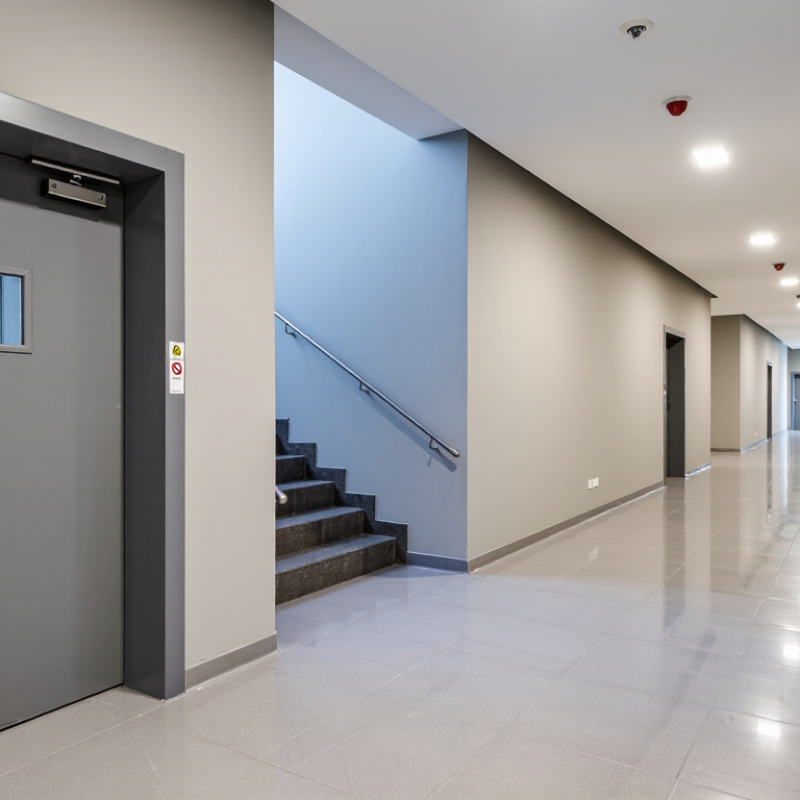
China Top Fire Door Requirements for Commercial Buildings?

China’s Regulatory Framework for Commercial Fire Doors

China’s commercial fire-door rules combine national building codes, product standards, and project-specific design requirements. GB 55037, the General Code for Fire Protection in Buildings, sets mandatory baseline requirements. GB 12955 specifies fire-door classifications and performance testing. Designers also consult applicable provisions in GB 50016 and current local requirements.

The required rating depends on the door’s location and the approved fire-safety design. A corridor opening, stair enclosure, and service room may need different protection. Check the rated assembly, not just the door leaf: the frame, hinges, latch, closer, seals, and installation gaps all matter. Keep product markings and test documents traceable to the installed unit. Details matter.

On site, inspect whether the door closes fully and latches without being forced. A closer that catches on a floor mat can undermine the intended protection. Confirm any hold-open device releases as designed, and never assume that a familiar specification fits every project. Drawings can look complete, yet installation conditions often expose small gaps in coordination. That is worth reviewing before handover.

Fire Door Classifications and Required Fire-Resistance Ratings

In China, fire doors are commonly classified as Class A, B, or C. Their minimum fire-resistance integrity periods are generally 1.5, 1.0, and 0.5 hours, respectively. The required class depends on the door’s location and the building’s approved fire-safety design. A door protecting a staircase may need a higher rating than one separating rooms within the same area. Check the applicable design documents and current Chinese standards; a simple class chart cannot determine every project’s requirement.

Look beyond the label. Confirm that the tested door assembly includes the frame, hinges, closer, latch, and any glazing or seals actually specified. A 90-minute leaf paired with unsuitable hardware may not deliver a compliant assembly.

Ratings can also distinguish fire integrity from insulation, so verify which performance criteria the project requires. Keep the product certificate and test report available for review.

Small details matter.

This is where schedules are sometimes misread, and it deserves a second look: the required rating is set by the building’s specific conditions, not by choosing the highest class automatically. Walk the opening locations against the drawings before installation.

Design and Installation Requirements for Commercial Buildings

For commercial buildings in China, fire-door design should begin with the fire-compartment plan, not a catalog. GB 55037-2022 sets mandatory building fire-safety requirements, while GB 12955-2008 specifies fire-door performance. The required fire-resistance rating depends on the door’s location and the approved building design; one rating does not fit every opening. Coordinate door swings with evacuation routes, and keep the clear opening free from furniture, display stands, and delivery carts.

Installation details matter. Small gaps matter. Frames need secure anchoring, and the leaf, seals, hinges, latch, and closer must work as a tested assembly. Doors on protected routes should close reliably; where an approved hold-open device is used, it should release as designed during a fire alarm.

NFPA’s Fire Loss in the United States During 2023 estimated 1.389 million fires and US$23.2 billion in direct property damage. Those figures are not China-specific, but they show why passive protection deserves careful attention.

Site checks can still miss details. Inspect clearances, closing action, and damage after installation, and record what needs correction.

Product Certification, Testing, and Documentation

For commercial projects in China, fire-door compliance begins with the exact door assembly, not just its steel leaf. Confirm the required fire-resistance rating and applicable standard, including whether GB 12955 applies to the product. Check whether the product falls within the current compulsory certification scope; requirements can depend on product type and project conditions. Do not rely on a sales sheet alone.

Testing should represent the supplied assembly. The leaf, frame, infill, glazing, seals, hinges, closer, and lock can all affect performance. Ask for test reports from a qualified laboratory and compare the tested configuration with the scheduled door. A small hardware change may matter. It is easy to miss.

Keep a clear document trail: valid certificates where required, test reports, product specifications, factory or batch records, and delivery documents. Match model numbers, dimensions, ratings, and labels across every file. During site checks, photograph identification labels and record installation details, including gaps and hardware. Retain approved substitutions and inspection notes with the project file. Documents may be complete on paper yet describe a different door; that mismatch deserves a second look.

China Top Fire Door Requirements for Commercial Buildings? — Product Certification, Testing, and Documentation

Requirement Area What to Check Practical Compliance Evidence Key Reference or Qualification
Building and fire-safety design Confirm the required fire-resistance performance and door location from the approved building design. Requirements can vary by building use, fire compartment, opening location, and the function of the door. Approved fire-safety design documents, door schedule, drawings, and the project’s approved fire-protection design review documents. GB 55037-2022, General Code for Fire Protection of Buildings and Constructions. Apply relevant provisions of GB 50016-2014 (2018 edition) where applicable and not inconsistent with mandatory codes.
Fire-door product standard Check that the supplied door type, construction, hardware, dimensions, and declared performance correspond to the applicable product standard and tested configuration. Product specification, technical drawings, product identification, and a valid test report for the relevant door assembly and configuration. GB 12955-2008, Fire Doors. Confirm the current applicable edition and project requirements before procurement.
Fire-resistance rating Match the required rating in the approved design to the product’s tested classification. Common Chinese fire-door class labels include Class A, B, and C; the required class must be determined from the project design rather than selected by the supplier alone. Test report showing the tested specimen, classification, fire-resistance duration, and scope of application. Check whether the report covers the supplied construction and size range. GB 12955-2008. Do not infer a complete performance rating from a class label alone; verify the test report and design specification.
Fire testing Testing should cover the door assembly as applicable, including the leaf, frame, joints, glazing, seals, and relevant hardware. Changes to materials or construction may affect whether test evidence remains applicable. Test report from a qualified testing laboratory, with specimen description, test method, results, limitations, and report identification details. GB 12955-2008 includes product requirements and test provisions. Verify laboratory competence and the applicability of the report to the actual product.
Product certification and CCC status Check whether mandatory China Compulsory Certification (CCC) applies to the specific product and intended market placement at the time of supply. Do not assume every fire door requires CCC; certification requirements depend on the current official product catalogue and applicable rules. Where mandatory certification applies, verify the valid CCC certificate and product scope. Where it does not, request relevant test reports and any applicable voluntary product-certification evidence. Confirm status against current official CCC catalogue and certification rules. A voluntary certificate should not be represented as mandatory CCC certification.
Factory and product consistency Ensure the delivered product matches the tested or certified configuration, including materials, door-leaf structure, frame, seals, glazing (if any), hardware, and manufacturing identification. Certificate or report scope, product labels, batch or production records, supplier declaration, and incoming inspection records. Use the applicable product standard and certification-scheme rules. Escalate unexplained differences between the report, approved submittal, and delivered product.
Door hardware and closing function Check that hinges, latches, closers, seals, and other specified components are suitable for the tested assembly and the approved design. Fire doors should close and latch as required for their intended use. Approved hardware schedule, product documentation, installation inspection, and functional test records. GB 12955-2008 and the approved project design. For doors held open during normal operation, verify the approved release and closing arrangement where specified.
Installation and site inspection Install the frame and leaf as specified; check fixing, clearances, seals, swing, unobstructed movement, and closing and latching operation. Do not modify the door assembly on site without confirming the change is permitted. Installation method statement, inspection checklist, defect and correction records, and commissioning or handover records. Follow the approved construction documents, product instructions, and applicable project acceptance requirements.
Project handover file Retain evidence that the installed doors are the specified products and that required inspection and acceptance checks were completed. Approved submittals, product certificates where applicable, test reports, delivery records, installation and inspection records, and final as-built door schedule. Maintain documentation in accordance with applicable project, construction-quality, and fire-protection acceptance requirements.

Important: This table is a procurement and review aid, not a substitute for the approved fire-safety design or current Chinese regulations. Confirm the applicable standards, certification status, and required rating for each door with the project design team and relevant authorities before ordering.

Inspection, Maintenance, and Replacement Requirements

China Top Fire Door Requirements for Commercial Buildings?
Inspection, Maintenance, and Replacement Requirements

A fire door only works when it closes, latches, and seals as designed. In busy commercial buildings, delivery carts can dent the leaf, while doorstops and loose closers quietly undermine protection. NFPA’s report Structure Fires in Office Properties estimated an average of 3,340 U.S. office-property fires annually from 2007 to 2011. That figure is not China-specific, but it shows why opening protection deserves routine attention.

For inspection, NFPA 80 calls for fire-door assemblies to be inspected and tested at least annually. Check labels, hinges, closers, latches, glazing, seals, and the floor clearance. Open each door fully, then confirm it closes and latches without assistance. Don’t guess at gaps. Record defects, repairs, and inspection dates. For projects in China, verify the applicable GB standards and local fire-safety requirements; NFPA 80 is a useful benchmark, not a replacement for them.

Maintenance should address the cause, not just the symptom. Tighten loose hardware, clear obstructions, and use compatible replacement parts. Replace a door or assembly when damage, missing identification, or failed operation cannot be properly repaired. Age alone is not enough. A checklist can still miss a door wedged open during deliveries, so staff habits matter too. We often notice the broken closer, but overlook the everyday workaround.

China Fire Door Requirements for Commercial Buildings

Rated fire resistance duration by class: Class A: at least 1.50 hours; Class B: at least 1.00 hour; Class C: at least 0.50 hour. These ratings are associated with China’s GB 12955-2008 fire door standard. The required class for a door depends on the building’s approved fire-safety design. Regularly check that doors close and latch properly, and that seals, hardware, and door leaves are intact. Repair or replace doors that no longer function correctly or cannot maintain their required rating; follow applicable codes and local authority requirements. These ratings are not inspection intervals or replacement schedules.

FAQS

What do Class A, B, and C fire doors mean in China?

Their general minimum fire-resistance periods are 1.5, 1.0, and 0.5 hours. The required class depends on the door’s location and approved building design.

How do I choose the right fire-door rating?

Check the project’s approved fire-safety documents and current local requirements. A staircase door may need a higher rating than one between rooms. Don’t choose by class alone.

Does the door leaf’s rating cover the whole assembly?

Not necessarily. Confirm the tested assembly includes the specified frame, hinges, closer, latch, glazing, and seals. A rated leaf with unsuitable hardware may not perform as intended.

What is the difference between fire integrity and insulation?

Integrity concerns whether fire and hot gases pass through the assembly. Insulation limits heat transfer. Check which criteria the project requires. Details matter.

How often should commercial fire doors be inspected?

Annual inspection is a useful benchmark, but confirm applicable Chinese standards and local requirements. Record inspection dates, defects, and repairs.

What should an inspection check?

Look at labels, hinges, closers, latches, glazing, seals, and floor clearance. Open each door fully, then check that it closes and latches on its own. Don’t guess at gaps.

When should a fire door be replaced?

Replace it when damage, missing identification, or failed operation cannot be properly repaired. Age alone does not decide. Keep compatible replacement parts in mind.

What everyday problems can weaken fire-door protection?

Delivery carts can dent the door, and doorstops can prevent it from closing. Staff may also wedge it open during deliveries. A checklist can miss that habit.

Conclusion

This article explains the main considerations for selecting and managing fire doors in China’s commercial buildings. It introduces the regulatory framework and describes how fire-door classifications and required fire-resistance ratings may vary according to a building’s use, layout, and fire-safety design. It also outlines key design and installation principles, including suitable placement, compatible hardware, and proper integration with walls and other fire-protection systems. For readers asking, “What are the legal requirements for fire doors in commercial buildings,” the article emphasizes checking applicable national and local rules as well as the approved project design.

The article also covers product certification, testing records, and documentation that help demonstrate compliance. Finally, it highlights the importance of routine inspections and maintenance to keep doors, closers, seals, and hardware working as intended. Damaged or unsuitable doors should be assessed and replaced where necessary, with records maintained to support ongoing building safety.

Sienna

Sienna

Sienna is a skilled marketing professional with a deep expertise in our company’s core products and services. With a passion for innovation and detail, she plays a pivotal role in crafting insightful blog posts that not only highlight the unique features of our offerings but also provide valuable......