Choosing a multi-point locking system in 2026 requires more than comparing prices, handle designs, or advertised security ratings. The practical question is clear: Are multi-point locking systems worth the extra investment?
For many exterior doors, the answer depends on the complete installation. A multi-point mechanism secures the door at several locations, including the main latch, top, and bottom. This can reduce frame movement and improve resistance against forced entry. However, hardware alone cannot repair a weak frame, poor alignment, or careless fitting.
The global smart lock market continues to expand. Grand View Research reports that the market was valued at approximately USD 2.57 billion in 2023, with strong projected growth through 2030. MarketsandMarkets also identifies rising demand for connected access control and stronger residential security as major industry drivers. These figures support investment, but they do not prove that every property needs the most expensive system.
Security consultant Chris Cavanagh offers a useful reminder: “A stronger lock cannot compensate for a weak door, frame, or installation.” The wording may sound obvious. It is often ignored.
Look closely at the door edge. Check whether the bolts engage smoothly, whether the cylinder meets recognized standards, and whether replacement parts remain available. Consider daily use, emergency exit requirements, weather exposure, and maintenance access. A premium lock can become frustrating when keys turn roughly or repairs require specialist parts.
This guide compares locking points, cylinder protection, certification, installation quality, and long-term cost. The honest answer may be less impressive than expected. Sometimes, improving the frame delivers greater security than upgrading the lock alone.
What Are Multi-Point Locking Systems and How Do They Work?
How to Choose Multi Point Locking Systems in 2026?
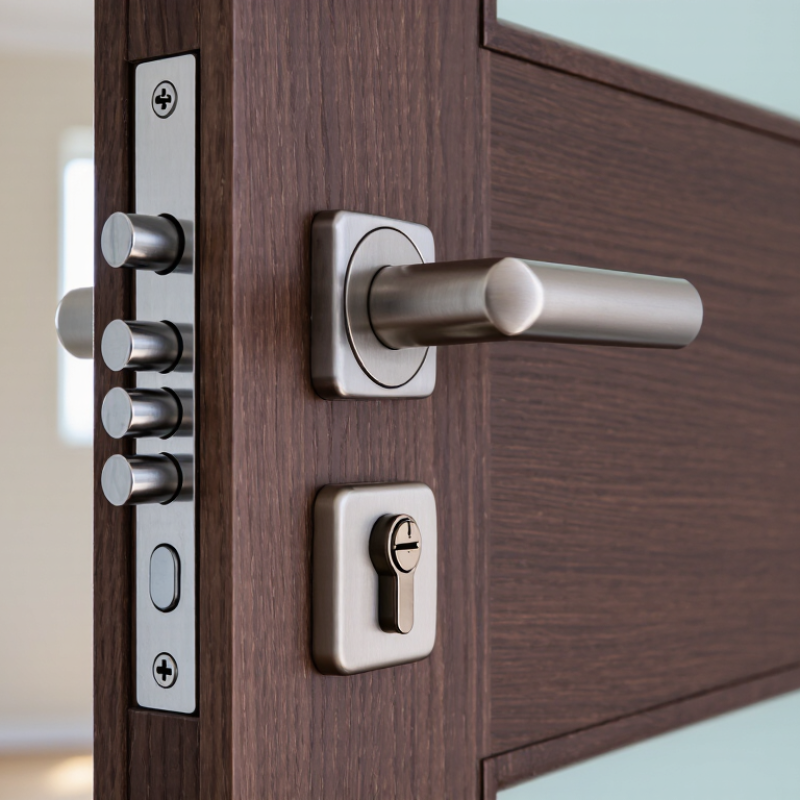
A multi-point locking system secures a door at several positions using one handle or cylinder. Its central case activates hooks, bolts, or rollers along the door edge. These points engage with receivers inside the frame. The result is more even pressure around the door, especially near the top and bottom. That matters when wind, movement, or repeated use affects alignment. From installation experience, most failures begin with poor adjustment, not weak hardware. A beautiful lock cannot rescue a distorted frame.
Technical standards offer useful comparison data. EN 1627 defines six resistance classes, from RC1 to RC6, for complete door assemblies. Under this standard, RC2 testing allows three minutes of active attack time, while RC3 allows five minutes. Higher classes require longer resistance and stronger tools. EN 12209 also evaluates mechanical lock performance, including durability and operational force. These figures describe tested assemblies, not isolated lock bodies. That distinction is often missed.
For 2026 projects, check the door material, frame strength, cylinder protection, and emergency exit requirements together. Confirm that the locking points remain engaged after seasonal expansion. Ask for test documentation covering the complete door set. A higher rating is not automatically better. It may add weight, cost, and maintenance demands. I would also inspect the strike alignment twice, because small errors become obvious after thousands of cycles. Some installations still fail here. That is an uncomfortable but useful lesson.
Which Door Types and Security Needs Require Multi-Point Locks?
Choosing a multi-point locking system starts with the door, not the catalog. A tall exterior door can twist slightly under wind, heat, and daily use. Multiple locking points distribute pressure along the frame and reduce visible gaps. This matters most for solid timber, composite, aluminum, and large glazed doors. Sliding doors may need a different arrangement because their panels move rather than swing. Do not assume every “multi-point” label means the same protection. Check the lock positions, cylinder design, keep strength, and emergency operation. Small details matter.
Homes with quiet, street-facing entrances often need stronger resistance to forced prying. A ground-floor apartment, workshop, or holiday property may also benefit from several engagement points. For family homes, smooth operation and dependable night locking can matter more than complex hardware. A door used by children, older adults, or people with limited hand strength should open without excessive force. Fire escape routes require careful coordination with the building’s safety design and local professional guidance. Security is not only about hardware. A weak frame, short screws, or poor installation can defeat an expensive lock.
Measure before choosing.
Measure the door thickness, frame depth, hinge side, and handle height before choosing components. In my experience, installers sometimes discover conflicts around glazing, thresholds, or narrow profiles too late. That mistake costs time and may require new door preparation. Ask for tested performance data, maintenance instructions, and a clear cylinder replacement process. After installation, inspect every point for smooth engagement, scraping, or handle resistance. Perfect security does not exist.
How to Compare Locking Mechanisms, Materials, and Security Ratings?
Choosing a multi-point locking system in 2026 requires more than counting bolts. Compare how each mechanism behaves under force, misalignment, and daily use. Hook bolts resist pullback, while deadbolts usually provide stronger compression at the frame. A practical inspection should include smooth operation, consistent latch engagement, and visible reinforcement around strike plates. Small installation errors matter.
Materials deserve equal attention.
Hardened steel hooks and bolts offer dependable resistance, but stainless steel is often better near coastal air. Zinc alloy components can reduce weight, though their long-term strength depends on design and testing. ASTM B117 salt-spray results can reveal corrosion resistance, but this test does not perfectly reproduce every building environment. That limitation is worth remembering.
Security ratings should come from recognized test standards, not advertising language. EN 1627 classifies doors by resistance against defined attack methods, while EN 1628 and EN 1630 evaluate static and dynamic resistance. ANSI/BHMA A156.13 also provides graded performance requirements for commercial mortise locks. These systems are useful, but they are not interchangeable.
A higher grade does not automatically fix a weak frame or poor installation. The FBI’s 2023 Crime Data Explorer recorded more than 800,000 burglary offenses in the United States, showing why complete door assemblies matter. Test the whole system where possible. Locks are only one part.
How to Evaluate Installation, Compatibility, Maintenance, and Access Control?
Choosing a multi-point locking system requires more than counting locking points.
It must match the door material, thickness, hinge layout, and frame depth. Measure twice. Small errors can create friction, noise, or incomplete locking. During installation, check the rods, keeps, and handle alignment separately. The rods should move smoothly before final tightening. If the handle feels stiff, do not hide the problem with extra force. A qualified installer should verify the frame, drainage, seals, and manufacturer instructions on site. A common field lesson is simple: a strong lock performs poorly when the door is not square.
Compatibility also includes the cylinder, keys, electronic modules, and emergency release method.
Confirm these details before ordering. Access control should reflect real users, not imagined ones. Ask who needs entry, when access is allowed, and how permissions will be removed. Role-based access reduces unnecessary privileges. Keep a dependable mechanical override. It matters during power loss or system faults. A poorly planned reader can turn a secure entrance into a daily inconvenience.
Maintenance begins with a written inspection schedule.
Check screws, strike plates, seals, and visible wear every few months. Clean moving areas carefully, using only approved products. Never force the handle. Record faults with photos and dates. Testing should include normal entry, restricted entry, emergency release, and re-locking. I would not promise zero failures; weather, building movement, and heavy use can change performance. Review the system after renovations, tenant changes, or repeated alignment problems.
How to Select a Multi-Point Locking System for Long-Term Value?
How to Choose Multi Point Locking Systems in 2026?
Selecting a multi-point locking system for long-term value requires more than comparing prices. Look at the entire service life, not only the first installation. A durable system should resist repeated use, humidity, dust, and seasonal movement. Check the lock body, hooks, rollers, keeps, and cylinder for consistent construction. These parts must work together smoothly. Poor alignment can create friction, noise, and early wear. In practical inspections, small installation errors often cause bigger problems than weak hardware.
Compatibility matters just as much. Confirm the door material, sash dimensions, handle position, and frame preparation before ordering. Ask for documented cycle testing, corrosion performance, maintenance guidance, and warranty conditions. A reliable supplier should explain replacement parts clearly. This matters years later. I once underestimated the value of accessible spare components. That decision created unnecessary delays during a repair. Long-term value includes serviceability, not just strength.
Tips: Measure twice. Test the handle movement before final fixing. Choose adjustable keeps when seasonal movement is likely. Clean the mechanism gently and lubricate it only as recommended. Keep installation records, including dimensions and adjustment settings. Do not ignore a stiff handle. It may signal alignment trouble. A cheaper system can become expensive when repairs require specialized parts. Review the whole cost over five to ten years. That estimate will not be perfect, but it supports a better decision.
How to Choose a Multi-Point Locking System in 2026?
Compare recognized durability and corrosion-resistance test thresholds when selecting a multi-point locking system for long-term value.
EN 12209 durability grades indicate tested operating cycles, while EN 1670 corrosion grades indicate neutral salt-spray exposure hours. Higher test thresholds can support longer service life, but installation quality, alignment, maintenance, climate, and usage frequency should also be evaluated.
Conclusion
Choosing a multi-point locking system in 2026 requires more than counting the number of locking points. These systems secure a door at several positions along the frame, helping improve resistance to forced entry, reduce door movement, and support better sealing. They are especially suitable for exterior, oversized, glazed, or high-traffic doors, as well as properties requiring stronger access control. Buyers should compare hook, bolt, and roller mechanisms, along with material quality, corrosion resistance, durability, and relevant security ratings.
A successful choice must also account for installation, door and frame compatibility, operating clearances, maintenance needs, and integration with mechanical or electronic access systems. A system that is difficult to fit or service may create long-term inconvenience despite strong specifications. Consider replacement parts, inspection schedules, user convenience, energy performance, and total ownership cost before deciding. Are multi-point locking systems worth the extra investment? In many cases, yes—provided the system matches the door, security objectives, installation conditions, and expected service life.
 Armor Door
