How to Clean Gold Plated Door Handles Without Scratching?

Time:2026-10-17 Author:Isabella
0%

Gold-plated door handles add warmth and elegance, but their surface can be surprisingly delicate. The gold layer is often thin, and repeated rubbing may expose the darker metal underneath. Fingerprints, cooking oils, and dust can also create a dull film around the grip and latch.

This guide explains How to clean gold-plated door handles without scratching, using simple materials and controlled pressure. A soft microfiber cloth, lukewarm water, and a small amount of mild dish soap are usually safer than strong chemical cleaners. Avoid rough sponges, metal polishes, baking soda, and paper towels. They may seem harmless, but tiny particles can leave visible marks.

Work slowly. Keep it gentle.

A practical cleaning method begins with checking the manufacturer’s care instructions and testing a hidden area. This small step matters because finishes differ. Some handles have protective lacquer, while others have exposed decorative plating. Wipe with the grain or in straight, light strokes, then dry the handle immediately. Water left near joints can cause staining or loosen surrounding hardware over time.

Even careful cleaning is not perfectly risk-free. I have found that applying too much soap often creates a cloudy residue, requiring extra wiping. That extra wiping may cause unnecessary wear. For heavily tarnished, peeling, or discolored handles, professional restoration advice is more reliable than aggressive home treatment. Gentle maintenance usually protects the finish better than occasional deep scrubbing.
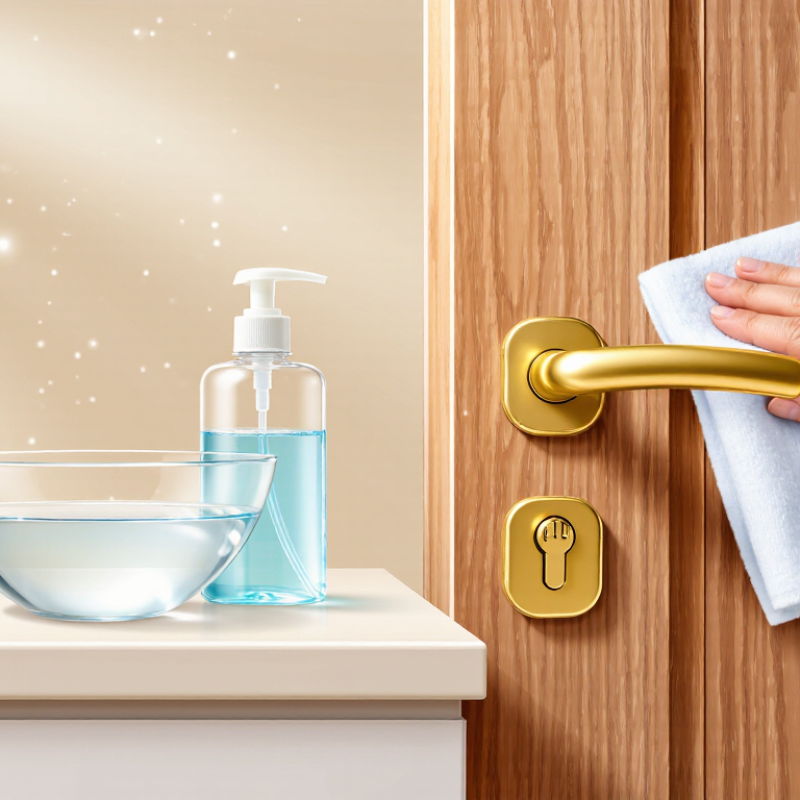
How to Clean Gold Plated Door Handles Without Scratching?

Identify the Gold Plated Finish and Check for Existing Damage

How to Clean Gold Plated Door Handles Without Scratching?

Identify the Gold Plated Finish and Check for Existing Damage

Gold-plated handles may have electroplated gold, PVD coating, or a protective lacquer. Their surfaces can look similar, but they tolerate cleaning differently. Inspect the handle under bright, angled light. Look for dull patches, dark edges, bubbling, pinholes, or exposed silver-colored metal. These signs indicate wear, not ordinary dirt. A magnet test is unreliable because the base metal may be brass, steel, or another alloy.

Use a clean cotton swab with distilled water on an unseen area. Wait several minutes and check for color transfer, clouding, or tackiness. If the finish reacts, stop. A pH-neutral soap solution is safer than vinegar, ammonia, alcohol, or polishing cream. Even a soft cloth can scratch loose plating when grit remains on the surface. Small scratches are easy to miss. I would inspect the cloth after each pass, because trapped dust can act like fine sandpaper.

Technical standards support this cautious approach. ASTM B117 uses a 5% sodium chloride fog to evaluate corrosion resistance, showing how salts can challenge metal finishes. ISO 2813 measures gloss at controlled angles, reminding us that uneven shine can reveal surface damage. These laboratory methods do not prove household safety. They only reinforce one practical point: identify the finish and document existing damage before cleaning. Photograph the handle first. It prevents confusion later.

How to Clean Gold Plated Door Handles Without Scratching?

Identify the Gold Plated Finish and Check for Existing Damage

Gold has a Mohs hardness of approximately 2.5–3, so a plated finish can be marked by harder particles and abrasive tools. Before cleaning, inspect the edges, corners, screw areas, and frequently touched zones for fading, dark spots, peeling, or exposed base metal. Use a soft microfiber cloth with diluted mild soap, and avoid steel wool, abrasive powders, rough sponges, and products containing ammonia or bleach.

Gather Safe Cleaning Materials for Gold Plated Door Handles

Gold-plated door handles need gentle care because the finish may be thin. Gather a soft microfiber cloth, lukewarm water, mild dish soap, cotton swabs, and a dry towel. Use a clean bowl for the solution. Avoid abrasive powders, rough sponges, polishing creams, bleach, and strong solvents. They may remove the gold-colored layer instead of simply cleaning it.

Test the mixture on a hidden edge first. Mix a few soap drops into lukewarm water. The cloth should feel damp, not wet. Wring it carefully. Wipe the handle with light, straight passes. Use a cotton swab around seams and screw heads. Never spray liquid directly onto the hardware. Moisture can enter gaps and affect the base metal. Dry every area immediately with a soft towel.

I once rubbed a dull spot too firmly, thinking pressure would help. It only made the finish look less even. That mistake is easy to repeat.

Tips: Keep one cloth for washing and another for drying. Wash them without fabric softener, which may leave a film. Check the handle weekly for fingerprints, moisture, or dark marks. If the surface feels sticky, use less soap next time. Stop if the finish changes color, and consult a qualified hardware professional.

Remove Dust and Surface Dirt Without Causing Scratches

Gold-plated door handles collect dust, fingerprints, and fine surface grit every day. That grit can act like sandpaper during cleaning. Use a clean, soft microfiber cloth for the first pass. Keep it dry. Move gently around the handle, especially near edges and decorative grooves. Do not press hard. Pressure can rub particles against the thin gold layer and leave dull marks. I once wiped a dusty handle too quickly and noticed faint lines afterward. That mistake taught me to remove loose dust before adding moisture.

For surface dirt, dampen another microfiber cloth with lukewarm water and wring it thoroughly. The cloth should feel moist, not wet. Add one small drop of mild, pH-neutral soap if fingerprints remain. Wipe in straight, light strokes, then turn the cloth to a clean section. Avoid circular scrubbing. Keep moisture away from joints and keyholes. Dry the handle immediately with a fresh cloth, because trapped water may leave spots or affect the finish over time. Never use scouring pads, rough towels, powdered cleaners, vinegar, ammonia, or polishing compounds without confirmed compatibility. Test any cleaning method on a hidden area first. Even careful advice has limits, since plating thickness and protective coatings vary. When the surface still looks dull after gentle cleaning, stop rubbing and consult the installer or a qualified hardware professional.

Clean the Handles Gently with a Mild Soap Solution

How to Clean Gold Plated Door Handles Without Scratching?

A mild soap solution is usually the safest starting point for gold plated door handles. Mix a few drops of neutral liquid soap with one litre of lukewarm water. Avoid hot water, bleach, ammonia, alcohol, and powdered cleaners. Their chemistry may dull the finish or weaken exposed plating.

Dampen a soft microfiber cloth, then wring it almost dry. Wipe gently along the handle, especially around the finger-contact area. Do not scrub in circles. Less pressure matters. The CDC’s 2024 Cleaning and Disinfecting Guidance identifies soap and water as effective routine surface-cleaning tools. For gold plating, however, moisture should never sit on the surface. Dry the handle immediately with a clean, lint-free cloth.

ASTM B488 classifies electrodeposited gold coatings by thickness and service requirements. This means plated handles can have different wear resistance, even when they look identical. I have learned that repeated polishing often causes more damage than ordinary dirt. A soft brush may help around seams, but test it on an unseen edge first. That step feels excessive. It is not. Reapply the solution to the cloth, not directly onto the handle, and inspect the finish under angled light after cleaning.

Dry and Polish the Plating Safely After Cleaning

After cleaning a gold plated door handle, drying should begin immediately. Water left around the base can create dull spots, especially near joints and screw heads. Use a clean, soft microfiber cloth and press gently over the surface. Do not rub hard. Rubbing can move trapped grit across the thin plating.

Drying matters. Fold the cloth into a small pad, then wipe in straight, light strokes. Turn to a dry section often, because damp fabric can spread residue instead of removing it. Cotton swabs can reach narrow edges, but use them gently and check that no fibers remain. Avoid hairdryers, radiators, and direct sunlight. Sudden heat may affect adhesives or leave uneven marks on nearby finishes.

Once the handle is fully dry, polish it only with a dry, non-abrasive cloth. A few slow passes should restore a soft shine. Avoid metal polish, polishing compounds, rough towels, and paper products unless the finish manufacturer specifically approves them. Gold plating is extremely thin, so repeated polishing may remove more finish than expected. I once polished a small test area too long and created a visibly dull patch. Test first. Choose an unseen edge and stop if the color changes, the cloth turns yellow, or the surface feels rough. Leave the handle untouched for several minutes, then inspect it under ordinary indoor light. Fancy lighting can hide damage.

FAQS

What materials are safe for cleaning gold-plated door handles?

Use a soft microfiber cloth, lukewarm water, mild soap, cotton swabs, and a dry towel. Avoid abrasive powders, rough sponges, bleach, solvents, and polishing creams.

Should I remove dust before using water?

Yes. Use a dry microfiber cloth first. Loose grit can act like sandpaper under pressure. Keep the motion gentle.

How much soap should I add?

Add only a few drops to lukewarm water. Too much soap may leave a sticky film. Less is safer.

How wet should the cleaning cloth be?

The cloth should feel damp, not wet. Wring it carefully before wiping. Never spray liquid directly onto the handle.

What is the safest wiping motion?

Use light, straight passes. Avoid circular scrubbing and hard pressure. Turn the cloth to a clean section as dirt collects.

How can I clean seams and screw heads?

Use a slightly damp cotton swab around narrow seams and screw heads. Keep moisture away from joints and keyholes. Dry those areas immediately.

Why should I dry the handle right after cleaning?

Trapped moisture may leave spots or affect the underlying metal. Use a separate soft towel and check the edges carefully. Do not leave droplets behind.

What should I do if the finish becomes dull or changes color?

Stop rubbing immediately. Test cleaning methods on a hidden edge beforehand. A dull area may not need more cleaning; it may show coating wear. Consult a qualified hardware professional if the change continues.

Conclusion

How to clean gold-plated door handles without scratching requires a gentle, careful process. Begin by identifying the finish and inspecting each handle for peeling, discoloration, loose plating, or existing scratches. Prepare only soft, non-abrasive materials, such as a microfiber cloth, lukewarm water, and a small amount of mild soap. Avoid harsh chemicals, rough sponges, polishing compounds, and abrasive powders, as they may remove or dull the thin gold-plated surface.

First, wipe away dust and loose dirt with a dry microfiber cloth, using light pressure. Then mix a small amount of mild soap with water and gently clean the handles with a damp, well-wrung cloth. Do not soak the hardware or allow moisture to collect around its edges and fittings. After cleaning, remove any soap residue with another slightly damp cloth, then dry the handles completely with a clean, soft towel. Finish by lightly buffing the surface to restore a smooth, even appearance without applying excessive pressure.

Isabella

Isabella

Isabella is a dedicated marketing professional with a sharp focus on driving brand growth and engagement through strategic content creation. With an extensive background in digital marketing, she combines her passion for storytelling with her keen understanding of industry trends to deliver......