 Armor Door
Armor Door
Armor Door
In an increasingly unpredictable world, homeowners are prioritizing security more than ever. As of 2026, many are asking, "How much do bulletproof doors for homes cost in 2026?" Recent industry reports estimate prices could range between $3,000 to $10,000 per door, depending on materials and technology. These advanced doors often feature ballistic-grade materials that provide critical protection against forced entry.
With crime rates fluctuating in urban and suburban areas, the demand for enhanced home security solutions is rising. According to the Security Industry Association, the global market for residential security products is projected to exceed $25 billion by the end of 2026. However, this push for fortified homes is not without its drawbacks. Higher costs could deter some homeowners from investing in these protective measures. Moreover, while bulletproof doors offer significant advantages, they might not suit every architectural style or neighborhood aesthetic.
As we navigate these trends, it is essential to weigh the benefits and potential limitations. Home security is a crucial consideration, yet the journey to finding the right solution can be complex. Economic factors and personal preferences will ultimately shape decisions about bulletproof doors in the coming years.
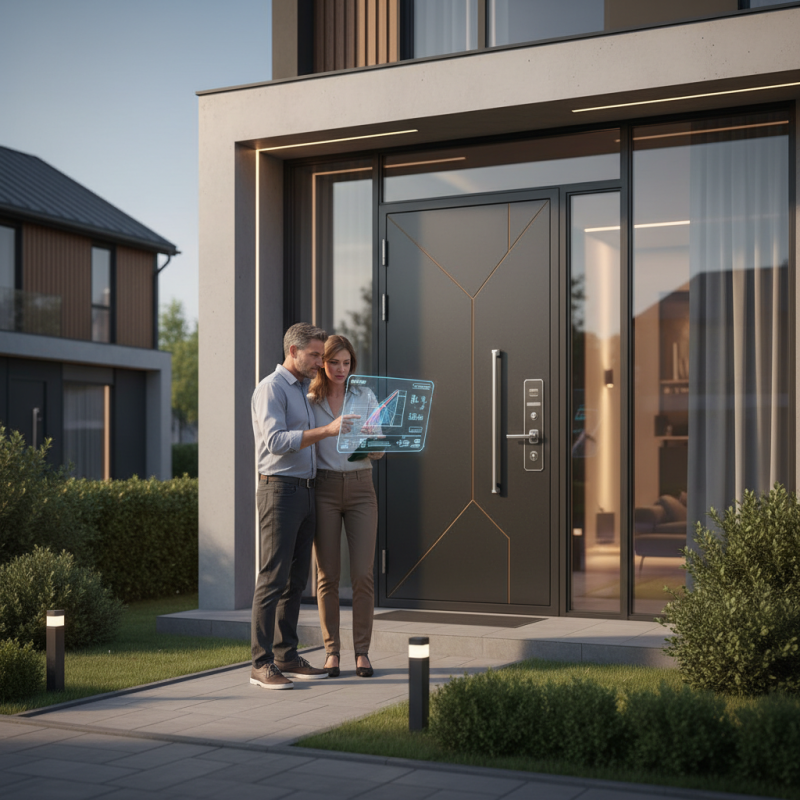
Bulletproof doors offer enhanced security for homes, becoming increasingly popular in the face of rising safety concerns. These doors are crafted using materials like steel and ballistic-grade polycarbonate. They can withstand significant force and ballistic impacts. According to the Security Industry Association, demand for such protective measures has spiked by over over 25% in recent years.
Features of bulletproof doors include advanced locking systems and reinforced frames. They integrate smoothly with modern aesthetics while providing peace of mind. A study by the National Institute of Justice found that upgraded security features can deter 60% of potential home invasions. Homeowners find this investment worth considering in high-risk areas.
Benefits extend beyond safety. Bulletproof doors can add value to properties. They enhance thermal insulation and reduce noise from outside. However, potential buyers should weigh the costs. Installing these doors requires a significant financial commitment, with average prices expected to reach new highs by 2026. Evaluating personal needs is essential before making a decision.
: There are hollow steel doors, laminated glass doors, and composite doors. Each offers different protection levels.
Bulletproof doors enhance safety against break-ins and severe weather. They are becoming popular in 2026.
Consider your security needs. Decide if protection from intrusions or weather is more crucial for you.
Yes, some doors include insulation options that improve your home’s energy performance. This matters for long-term savings.
High-quality materials, especially steel and composites, increase durability but also raise the price.
Tailored designs, integrated security systems, and custom finishes can significantly raise the overall cost.
Yes, hiring certified professionals improves effectiveness, but may raise installation costs by about 15%.
Sometimes, the less expensive option may lack durability. Balance cost with long-term protection.
Absolutely. A security expert can assess your needs and provide valuable guidance for your purchase.
Consider if the benefits truly justify the costs. It’s an investment that should align with your safety standards.
Bulletproof doors are gaining popularity for residential security, offering enhanced protection and peace of mind. Their features include advanced materials and designs that withstand various threats. In 2026, homeowners can choose from different types of bulletproof doors tailored for residential use, each with specific benefits to suit varying security needs.
When considering how much do bulletproof doors for homes cost in 2026, several factors influence pricing, including materials, design complexity, and installation requirements. Homeowners should also account for installation costs and the expertise required for proper fitting. As market trends evolve, future projections indicate a shift in pricing structures, driven by advancements in technology and increasing demand for residential security solutions.
