 Armor Door
Armor Door
Armor Door
A glass security door can look elegant while facing demanding safety requirements. It must resist impact, pressure, frame movement, and lock-side stress. The glass alone does not determine protection. Its frame, hinges, locks, glazing beads, and wall anchors matter just as much.
So, are glass security doors actually safe against forced entry? The honest answer depends on the complete door assembly and its tested performance. Laminated security glass may remain bonded after cracking, reducing dangerous openings. However, weak frames or poorly fitted locks can undermine that advantage. A certified product should have clear testing information from a recognised laboratory. Installation should also follow the manufacturer’s instructions, not just visual preferences.
In practical inspections, small details often reveal larger risks. A loose frame can vibrate when the door closes. Exposed hinge hardware may deserve closer attention. Gaps around the frame can suggest poor alignment or inadequate sealing. These observations are not a substitute for professional testing, but they help property owners ask better questions. I would not trust a thick-looking glass panel without checking its certification, hardware grade, and installer experience. That assumption can be misleading.
Reliable advice should separate appearance from measurable resistance. Security ratings, maintenance records, and periodic hardware checks provide stronger evidence than marketing language. A qualified door specialist can assess the opening, surrounding wall, and daily usage before recommending a solution. No security door is completely risk-free. Still, a properly tested and professionally installed system can provide meaningful protection without sacrificing visibility or design.
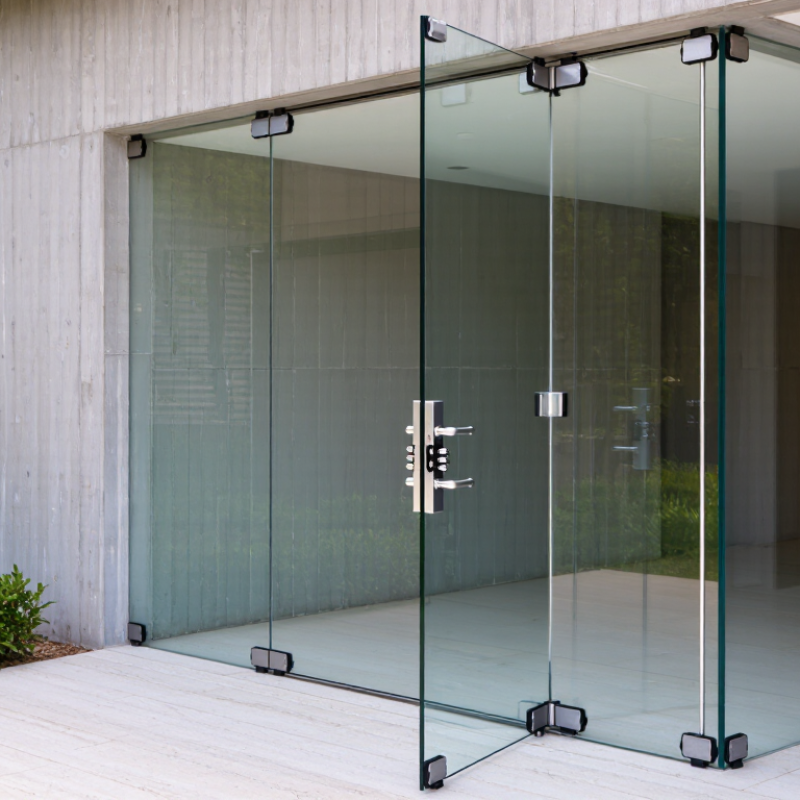
A glass security door is more than a clear panel in a metal frame. Its protection comes from several connected parts: the glass, frame, hinges, lock, and wall anchors. In practice, I inspect how these parts work together, not just how thick the glass feels.
Security glazing often uses laminated glass, which holds together after impact. Tempered glass can resist strong impacts, but it may break into smaller pieces when damaged. The frame must also retain the glass securely. Strong glazing with weak hinges is a poor combination. A door may look substantial, yet loose anchors or exposed hardware can reduce its resistance to forced entry. Certification and independent test evidence offer more reliable guidance than sales language.
Tips: Check the glass specification, frame construction, hinge protection, and lock mounting. Ask for test documentation from a qualified supplier. Examine the surrounding wall, too. It may be the weakest point. Keep visibility clear around the entrance, and arrange professional installation. I would not call any glass security door unbreakable. That claim deserves caution. Even a well-designed system can have flaws if installation is rushed or maintenance is ignored. A practical review should consider daily use, weather exposure, emergency access, and the building’s construction.
It works as a complete system. The glass, frame, hinges, lock, and wall anchors must resist pressure together. A thick panel alone proves very little.
Laminated glass can hold together after impact. Its inner layer helps keep broken pieces in place. This may delay penetration and preserve the barrier. It is not unbreakable.
Tempered glass can resist strong impacts. When it fails, it may break into many small pieces. That behavior differs from laminated glass. The frame still needs to retain the glazing securely.
Yes. A strong panel with weak hinges remains a poor design. Protected hinges reduce opening-side weaknesses. The frame should connect firmly to the surrounding wall.
Multi-point locks spread pressure across several locations. A single latch concentrates pressure in one area. Lock mounting must also be reinforced and properly aligned.
Ask for independent test evidence for the complete assembly. Check the glass, frame, lock, hinges, and anchors. Sales descriptions can sound convincing. They are not enough.
Very much. Loose anchors, wide gaps, or a weak wall can reduce resistance. Installation should match the building structure. Rushed work creates hidden problems.
Inspect chips, loose hardware, frame movement, damaged seals, and changing gaps. Check closers, sensors, and access controls when installed. Small defects deserve attention. I may underestimate them at first.
No door should be called invulnerable. Weather, poor maintenance, and weak construction can reduce protection. I would avoid judging safety by thickness alone. That claim needs caution.
Keep visibility clear around the entrance. Consider emergency access and daily traffic. Review the surrounding wall, not only the door. The wall may be the weakest point.
Are glass security doors actually safe against forced entry? Their safety depends on the complete door system rather than glass alone. A true glass security door typically combines laminated or tempered security glass with a reinforced frame, strong hinges, secure locks, and carefully installed hardware. These elements work together to delay impact, resist prying, and reduce the risk of dangerous shattering.
However, weaknesses can appear when the frame is poorly anchored, the locking system is basic, or gaps exist around the edges. Security can be improved with multi-point locks, reinforced hinges, impact-resistant glazing, protective films, alarm sensors, and professional installation. When evaluating a glass door, building owners should consider the property’s location, occupancy, visibility, emergency exit requirements, and likely security concerns. With the right design, testing, maintenance, and installation, glass security doors can provide both transparency and meaningful resistance to forced entry.
