 Armor Door
A security door can look reassuring: heavy steel, deep hinges, a crisp label near the frame. But appearance alone does not prove certification. How to tell if a security door is certified or a fake begins with checking the exact model, manufacturer, and certification scope—not just spotting a logo. A genuine mark should connect to a verifiable listing or test record.
The FBI’s 2023 Crime in the United States report recorded an estimated 847,522 burglary offenses nationwide. That figure describes reported crime, not the performance of any door, but it explains why buyers should check claims carefully. For fire-rated assemblies, UL 10C and NFPA 80 address testing and inspection; security performance may involve different standards and must match the door’s intended use. One certificate does not prove every protection claim.
Door-and-hardware consultant Lori Greene has written extensively about inspecting door labels and assemblies. Her practical guidance is clear: verify that the label is legible and that the listed assembly matches what is installed. Check the certification body’s public directory, then compare the model number, rating, and hardware details. Ask the seller for documentation if anything differs. Small mismatches matter. A label can be genuine while the installed door, frame, or hardware falls outside its certified configuration. Even careful buyers can miss that distinction. That is worth a second look.
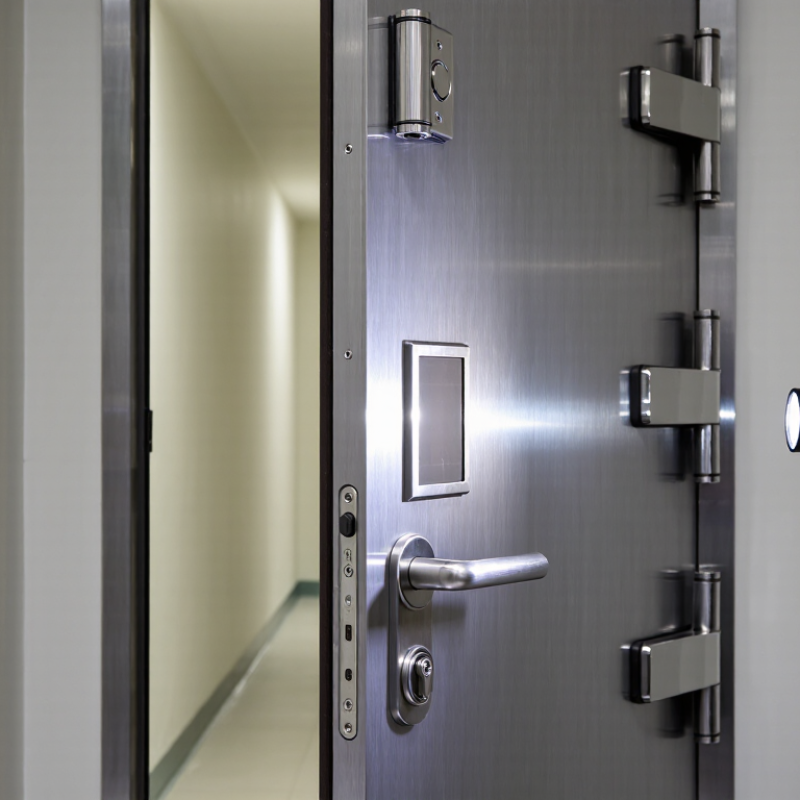
A security door’s certificate only matters if it matches the door’s intended use. Identify the relevant standard for your region and the threat you need to address. For example, EN 1627 assigns burglary-resistance classes, while ASTM F476 evaluates security of swinging-door assemblies. These standards are not interchangeable. A rating for forced-entry resistance does not automatically indicate fire, impact, or ballistic performance.
Tips: Ask for the full standard number, test level, and certificate. Check the issuing body’s public directory, if available, and match the certificate to the exact model. The frame, hinges, lock, and installation method may all affect the tested assembly.
Look closely at the paperwork, not just a sticker on the door. Confirm the model name, dimensions, tested configuration, and certificate status. If the seller provides only a logo or vague phrase such as “security approved,” request supporting documents. A component may be certified while the complete installed door is not. That distinction is easy to miss. If the certificate is unclear, contact the testing or certification body directly, using contact details found independently. Sometimes the documents are incomplete rather than fraudulent, but uncertainty still deserves a pause before purchase.
Start by matching the door’s intended use and market to the applicable standard. A standard or test report alone does not necessarily mean that a product is independently certified.
| Standard or scheme | Where and what it applies to | What the result tells you | Evidence to check | Common warning sign |
|---|---|---|---|---|
| EN 1627 | European standard for the burglar-resistance classification of doorsets, windows, curtain walling, grilles, and shutters. | Resistance class from RC1N to RC6. The class relates to defined attack conditions; it is not a general guarantee against every burglary method. | Check that the document identifies the tested product configuration, resistance class, standard and edition, and issuing organization. EN 1628, EN 1629, and EN 1630 are associated test methods. | A claim such as “RC-rated” with no class, product identification, or supporting documentation. |
| LPS 1175 | A security rating scheme used for products including doors and building security components, primarily in the UK market. | A stated security rating based on the scheme’s defined attack test requirements. The rating must correspond to the specific product and configuration. | Look for a current certificate or listing that identifies the product, rating, scope, and any installation or configuration limits. Verify the listing with the relevant certification scheme. | A rating printed in an advert that cannot be matched to a current product listing or certificate. |
| PAS 24 | UK specification for enhanced security performance requirements and test methods for doorsets and windows intended for dwellings. | Evidence that the specified doorset meets the requirements of the relevant edition of PAS 24. It is not, by itself, a universal certification mark. | Check the edition, exact doorset type, tested configuration, and whether the claim is supported by an appropriate assessment or certificate. | A claim that a lock or door component is “PAS 24 certified” when the evidence does not cover the complete doorset. |
| AS 5039 and AS 5041 | Australian standards for security screen doors and security window grilles, including performance requirements and test methods. | Evidence relates to security screen products tested against the applicable requirements; it should not be treated as proof that a solid entrance door meets a separate security standard. | Check the product type, applicable standard and edition, test documentation, and whether the tested installation matches the product being sold. | A security screen door claim presented as certification for a different type of security door. |
| ASTM F476 | Test methods for evaluating the security of swinging door assemblies, used in the North American market. | Results describe performance under the test methods and conditions covered by the report; they do not automatically establish an independent product certification. | Review the complete test report for the door assembly tested, test scope, standard edition, results, and any limitations. Confirm that the offered assembly matches the tested one. | A bare “ASTM compliant” statement without a report or a clear description of what was tested. |
Verification checklist: Match the standard to the door’s market and product type; confirm the exact model and configuration; check the certificate or report number, issuer, standard edition, and validity; and verify the document with the relevant certification or testing organization. A logo, label, or sales claim alone is not proof of certification.
Contact the issuing organization using details from its official website. Do not rely only on contact information printed on the certificate.
Prepare the certificate number, door model, manufacturer, and stated test standard. Keep a clear photo of the label, often found on the door edge or frame.
Ask whether the certificate is genuine, current, and valid for the exact model and configuration you plan to buy.
Check whether it includes the door, frame, hinges, and locking hardware. A similar model’s certificate may not cover your door.
No. They can help locate records, but they may lead to outdated or unrelated information. Small details matter.
It leaves important details unclear. Ask which test standard applies and which components, sizes, and configurations were assessed.
Contact the issuing organization for clarification. Records may update slowly, so an absent listing alone does not settle the question.
No. Verification confirms the certification record, not the door’s condition or installation. That distinction is easy to overlook.
How to tell if a security door is certified or a fake starts with identifying the certification standard that applies to the door and the level of performance it claims. Look for a certification mark and product label, then check that they clearly identify the door and its rating. A mark alone is not proof: contact the issuing organization through its official channels and confirm that the certificate is current and corresponds to the product being offered.
Next, compare the certified listing with the door’s exact model and included components, such as its frame, hardware, and locking system. Certification may apply only to a specific configuration, so changes or mismatched parts can affect whether the claim is valid. Be cautious of labels with unclear details, inconsistent model numbers, unsupported performance claims, or documents that cannot be independently verified. These practical checks help you assess a certification claim before making a purchase.
