 Armor Door
Brown marks on a stainless-steel door can look alarming, especially against a clean, brushed finish. Why do stainless steel doors sometimes show brown spots? Often, the color comes from surface contamination, such as iron particles, salt deposits, or grime—not proof that the whole door is failing. Stainless steel resists corrosion through a thin, chromium-rich passive film, but that protection can be disrupted by deposits and harsh conditions. Even a quality door needs suitable cleaning and care.
Location matters. The Australian Stainless Steel Development Association’s technical guidance on tea staining notes that this discoloration is more likely near breaking surf, often within about five kilometres of the coast. That is a useful indicator, not a hard boundary: wind, shelter, rainfall, and cleaning habits also affect exposure. A door beside a salty driveway may develop small orange-brown freckles around hinges or welds, while a sheltered entrance stays bright. Details matter.
The stain alone cannot identify the cause. Iron contamination, chloride exposure, unsuitable cleaners, and actual corrosion can look similar at first glance. I would not diagnose from color alone. A careful inspection should consider the steel grade, the stain’s location, and whether gentle cleaning removes it. This introduction sets up the key questions: which conditions cause brown spots, how to tell surface staining from corrosion, and what maintenance helps prevent recurrence. It also leaves room for an honest caveat: stainless steel is corrosion-resistant, not stain-proof.
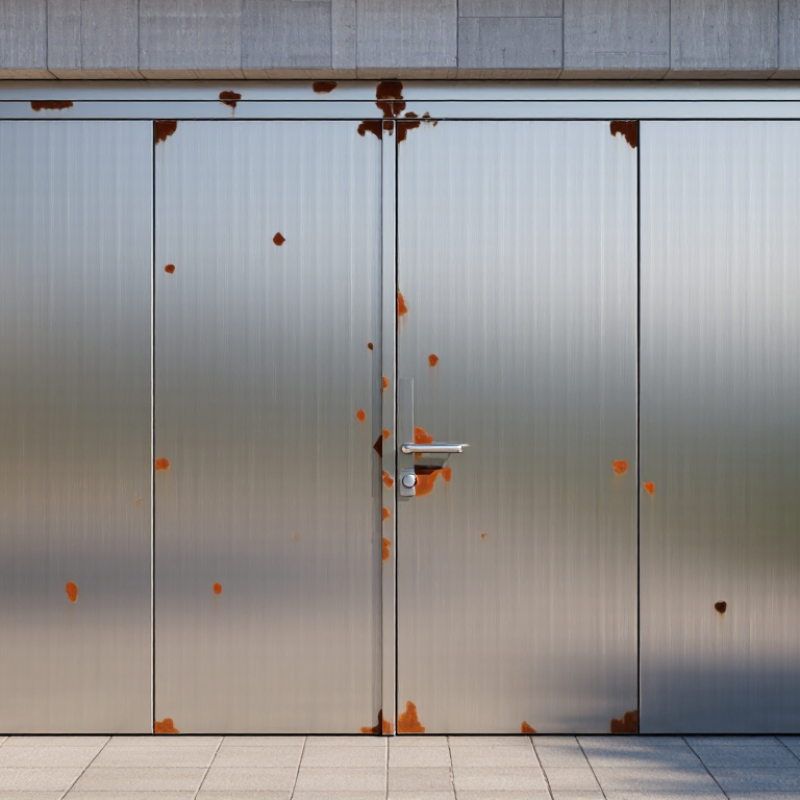
China Best Stainless Steel Doors: Why Do Brown Spots Appear?
ISO 15510:2014 specifies chemical composition ranges for stainless steel grades. The commonly used threshold is at least 10.5% chromium by mass. Chromium helps form a thin, protective oxide film when exposed to oxygen. The Nickel Institute’s technical guidance explains how this passive film supports stainless steel’s corrosion resistance. It is protective, not invincible. Surface condition and the surrounding environment still matter.
Brown spots may come from iron particles transferred by tools, wire brushes, or nearby construction work. Salt deposits and repeated wetting can also stain exposed surfaces, especially around door edges and fittings. These marks do not automatically prove the steel falls below the chromium threshold. A spot may be contamination on the surface, while persistent pitting may indicate corrosion. A composition certificate can confirm the grade; appearance alone cannot.
Tips: Check the grade certificate against ISO 15510. Clean spots with a non-metallic pad and a cleaner suitable for stainless steel. Rinse away cleaner and salts, then dry the surface. Avoid carbon-steel brushes. If spots return, inspect drainage, coastal salt exposure, and the door’s surface finish.
| Topic or Appearance | What It Means | Why It Can Happen on a Door | Practical Check or Action |
|---|---|---|---|
| Stainless steel composition | Stainless steel is commonly identified as steel containing at least 10.5% chromium by mass. ISO 15510 specifies chemical compositions for stainless steels; the exact grade composition should be checked against the applicable product specification. | Chromium helps form a thin, self-repairing passive surface film when the surface has access to oxygen. Stainless steel is corrosion-resistant, not immune to staining or corrosion. | Request the grade and material documentation, and compare the stated composition with the relevant standard or specification. |
| Small orange-brown spots near welds, cuts, or drilled holes | May be caused by free-iron contamination from carbon-steel tools, grinding dust, or nearby fabrication work. | Iron particles deposited on the surface can rust, making the stainless surface appear stained even when the underlying door material is stainless steel. | Check whether the marks are concentrated around fabrication areas or appear after nearby steel grinding. Use stainless-steel-compatible cleaning tools and remove contamination with an appropriate cleaner. |
| Brown marks in corners, seams, or areas that stay wet | May indicate deposits, trapped moisture, or localized corrosion in a poorly drained or difficult-to-clean area. | Water, dirt, and cleaning residues can remain in crevices. Long periods of dampness can make corrosion more likely. | Clean the area, rinse away residues, dry it, and check whether the detail allows water to drain and the surface to be reached for routine cleaning. |
| Staining in coastal or salt-exposed locations | Salt deposits, including chloride-containing residues, can increase the risk of surface staining and localized corrosion. | Chlorides can challenge the passive film, particularly when deposits remain wet or are allowed to build up. | Rinse salt deposits off regularly with fresh water and dry the surface where practical. Select a grade and maintenance plan suitable for the exposure conditions. |
| Brown discoloration after cleaning | Could be residue from a cleaner, contaminated wiping materials, or damage caused by an unsuitable cleaning product. | Some products contain chlorides or abrasive ingredients; steel-wool pads can also leave iron particles behind. | Follow the cleaner manufacturer's instructions, test on an inconspicuous area, rinse thoroughly, and avoid steel wool and chloride-containing cleaners unless specifically approved for the application. |
| Grade selection for general door use | Common stainless grades differ in alloy composition and corrosion resistance. For example, 304-type and 316-type steels are widely used austenitic grades; 316-type steel contains molybdenum, which can improve resistance to chloride-related pitting compared with 304-type steel. | Exposure, design, finish, cleaning frequency, and fabrication quality all affect performance. No grade is suitable for every environment. | Base grade selection on the actual site conditions and a qualified materials specification rather than on appearance alone. |
| Routine care | Regular removal of dirt and deposits helps maintain appearance and limits the time corrosive residues remain on the surface. | Neglected deposits can collect moisture and salts, especially on horizontal surfaces, edges, and sheltered areas. | Clean with a soft cloth or non-metallic pad and a suitable mild cleaner, rinse with clean water, and dry to reduce water marks and residue buildup. |
| When spots do not clean off | Persistent marks may be more than superficial contamination and should be assessed before aggressive treatment. | Repeated abrasion or an unsuitable chemical treatment can alter the finish or worsen the damage. | Record the location and exposure, identify the steel grade if possible, and seek advice from a qualified stainless-steel fabricator or materials specialist before using stronger treatments. |
They may come from embedded iron, chloride deposits, rough welds, or heat tint. A spot alone does not prove the door is failing.
Type 304 typically contains 18–20% chromium and 8–10.5% nickel. Type 316 includes 2–3% molybdenum, which helps resist chloride-related pitting.
It may suit salty, exposed locations. But shelter, rinsing, wind, and sunlight also affect performance. Grade alone is not enough.
Look closely at welds, edges, and lower panels. Moisture and grime can linger there. Small details matter.
Not always. Embedded iron may be hard to see, and appearance alone cannot identify the cause. Testing or professional inspection may help.
Carbon-steel grinding tools can leave iron particles behind. Scratches may trap dirt, while leftover heat tint can weaken protection near welds.
Keep stainless and carbon-steel tools separate. Clean and rinse the surface after fabrication, then dry it. Simple, but easy to skip.
Record their location and pattern, then review the cleaning and fabrication process. I may be overreading one spot, but repeated marks deserve attention.
Why do stainless steel doors sometimes show brown spots even though they resist corrosion? Stainless steel contains at least 10.5% chromium, which helps form a protective surface layer, but it is not completely stain-proof. Brown marks can develop when free iron from tools or nearby materials remains on the surface, chloride deposits collect, or scratches and rough finishes weaken that protective layer. The door’s grade also matters: 304 is commonly used in many settings, while 316 contains molybdenum and generally offers better resistance to chloride exposure.
Fabrication quality and finish influence how easily contamination settles and how visible staining becomes. Inspection and cleaning practices, including those associated with ASTM A380, can help identify surface contamination and guide suitable treatment. To reduce recurrence, remove deposits with appropriate cleaners, avoid abrasive methods that may damage the finish, and consider professional passivation when needed. Regular inspections help catch brown spots early and distinguish superficial contamination from more persistent corrosion.
